Now Reading: Brick vs. Concrete Pavers: Which One is Best for Florida Homes?
-
01
Brick vs. Concrete Pavers: Which One is Best for Florida Homes?
Brick vs. Concrete Pavers: Which One is Best for Florida Homes?
Choosing the right material for your driveway, patio, or walkway can be a challenge — especially in Florida, where heat, humidity, and rainfall can quickly wear down low-quality surfaces. Two of the most popular and reliable choices for homeowners in Mount Dora are brick pavers and concrete pavers.
But which is better for your project? In this post, we’ll compare brick vs. concrete pavers across the categories that matter most — durability, appearance, maintenance, cost, and climate suitability.
1. Durability and Lifespan
Brick Pavers:
Made from natural clay and fired at high temperatures, brick pavers are extremely dense and long-lasting. They’ve been used for centuries in walkways and streets.
• Excellent strength and load capacity
• Naturally fade-resistant
• Can last 25+ years when properly installed
Concrete Pavers:
Manufactured from a concrete mixture with added pigment and molds, these pavers are versatile and strong — though slightly more prone to erosion over time.
• High load resistance
• Can be sealed to improve longevity
• Average lifespan: 20–30 years with proper care
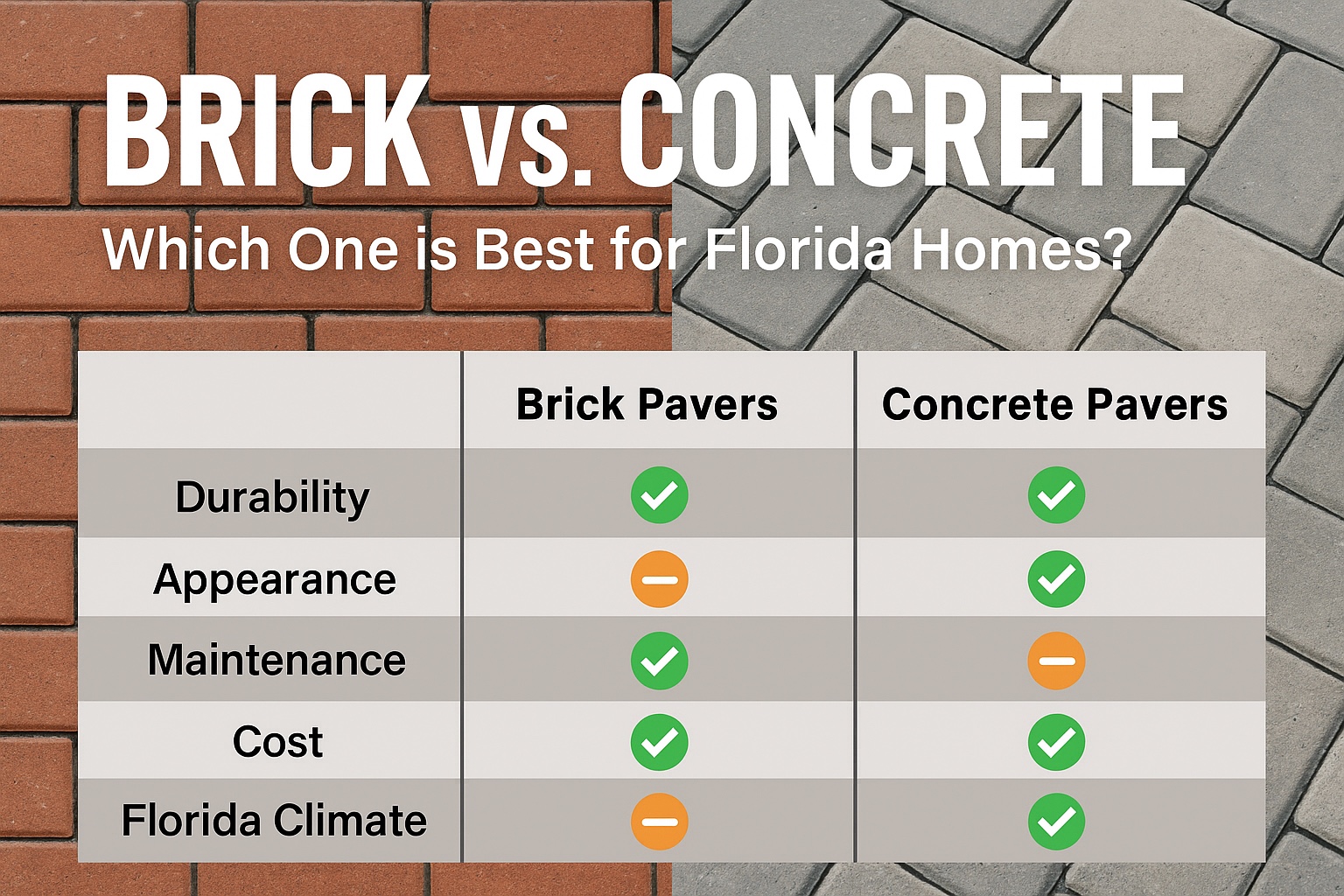
Winner: Tie — both are durable, but brick edges out slightly in long-term color retention.
2. Appearance and Style Options
Brick Pavers:
Offer a timeless, warm, rustic appearance that fits well with classic or colonial-style homes. Color options are more limited (mostly reds, browns, and tans), but they age beautifully.
Concrete Pavers:
Come in a wide range of shapes, sizes, textures, and colors — including styles that mimic natural stone or even wood. Ideal for modern or customized designs.
Winner: Concrete pavers — more versatility in aesthetic and design flexibility.
3. Maintenance and Repairs
Brick Pavers:
Require minimal maintenance. However, due to natural variation in shape, installation may take slightly longer. Moss and mildew may develop in shaded areas, but can be removed easily.
Concrete Pavers:
May fade over time if not sealed, especially in Florida’s sun. However, maintenance is still relatively low, and individual pieces are easily replaceable.
Winner: Brick pavers — edge out slightly due to better long-term performance without sealant.
4. Cost and Value
Brick Pavers:
Typically cost more per square foot due to manufacturing and transport, especially for premium clay. Installation is also slightly more labor-intensive.
Concrete Pavers:
More budget-friendly and widely available. Faster to install, which lowers total project cost.
Winner: Concrete pavers — better option if budget is a primary concern.
5. Climate Compatibility (Florida)
Brick Pavers:
Hold up well in heat and humidity. Their natural composition resists UV fading and temperature changes.
Concrete Pavers:
Designed with climate durability in mind. Can handle expansion/contraction, but may need sealing to resist water infiltration.
Winner: Brick pavers — slightly better suited for Florida’s extreme sun and moisture when unsealed.